
EMG and Nerve Conduction Studies
Electrodiagnostic testing that shows how well your nerves and muscles are working, to pinpoint pinched nerves, neuropathy, and nerve entrapment.
Why get electrodiagnostic testing?
Numbness, tingling, weakness, or burning pain can come from a pinched nerve in the neck or back, a trapped nerve in the arm or leg, or nerve damage throughout the body. These problems can feel alike but need different treatment.
Nerve conduction studies (NCV) and electromyography (EMG) measure the electrical activity of your nerves and muscles. Together, they show whether a nerve is injured, where the problem is, and how severe it is.1,2
A pinched nerve root in the neck or low back, often from a disc or arthritis
Nerve damage in the feet and hands, often from diabetes or other causes
A trapped nerve, such as carpal tunnel or ulnar nerve entrapment at the elbow
Nerve conduction study
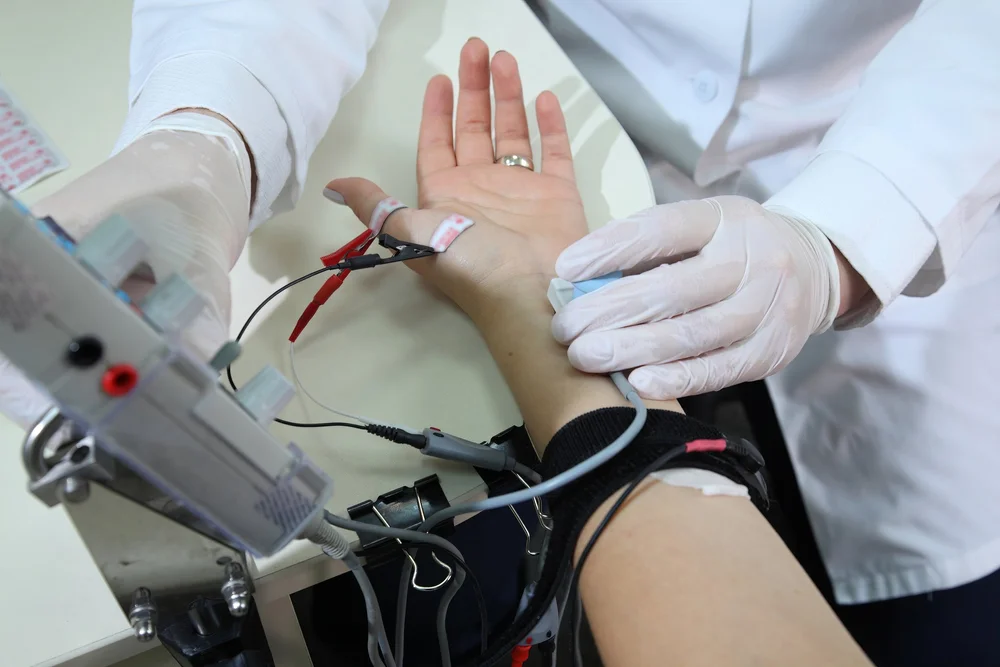
Small sticky sensors are placed on your skin over a nerve and muscle. A brief, mild electrical pulse stimulates the nerve, and the sensors record how fast and how strongly the signal travels. Each pulse feels like a quick tap or tingle.2
Electromyography (EMG)
A very thin needle electrode is placed into a few muscles to record their electrical activity at rest and as you gently tighten them. There is no electrical shock with this part. It may feel like a brief pinch, and muscles can be a little sore afterward.1
- About 30 to 60 minutesDepending on how many nerves and muscles are tested.
- No sedationYou can drive yourself and return to normal activities right away.
- Results explainedYour physician reviews the findings and next steps with you.
- Guides treatmentHelps decide among therapy, injections, bracing, or surgical referral.
What to expect
Before your test
Shower the day of the test and don’t use lotion, oils, or creams. Wear loose clothing. Tell us if you take blood thinners or have a pacemaker or defibrillator.1,2
During your test
You lie or sit comfortably. The nerve conduction part comes first, followed by EMG of selected muscles. Let us know if anything is too uncomfortable.
After your test
You can return to your usual activities. Mild soreness or small bruises where the needle was used can last a day or two.
Common questions
Does it hurt?
Most people find it tolerable. The electrical pulses feel like quick taps or tingles, and the EMG needle is much thinner than a needle used for shots.
I have a pacemaker. Can I be tested?
Usually yes, with some precautions. Please tell us before your test.2
Why do I need this if I already had an MRI?
An MRI shows structure, like a disc or narrowing. EMG and nerve testing show whether a nerve is actually working abnormally, which helps confirm the cause of your symptoms.
Will insurance cover it?
Most plans cover EMG and nerve conduction studies when symptoms suggest a nerve problem. Our staff can check your benefits.
Talk with a specialist about numbness, tingling, or weakness
Our physicians will review your symptoms and decide whether EMG and nerve conduction testing will help guide your care.
New pain management patients need a referral. Your provider can fax it to 870-706-2428.
Safety
EMG and nerve conduction studies are very safe. Possible side effects include temporary soreness, small bruises, and, rarely, bleeding or infection where the needle was used. Individual results vary.
Sources
- MedlinePlus, U.S. National Library of Medicine. Electromyography. medlineplus.gov
- MedlinePlus, U.S. National Library of Medicine. Nerve conduction velocity. medlineplus.gov
Photo: Getty Images.